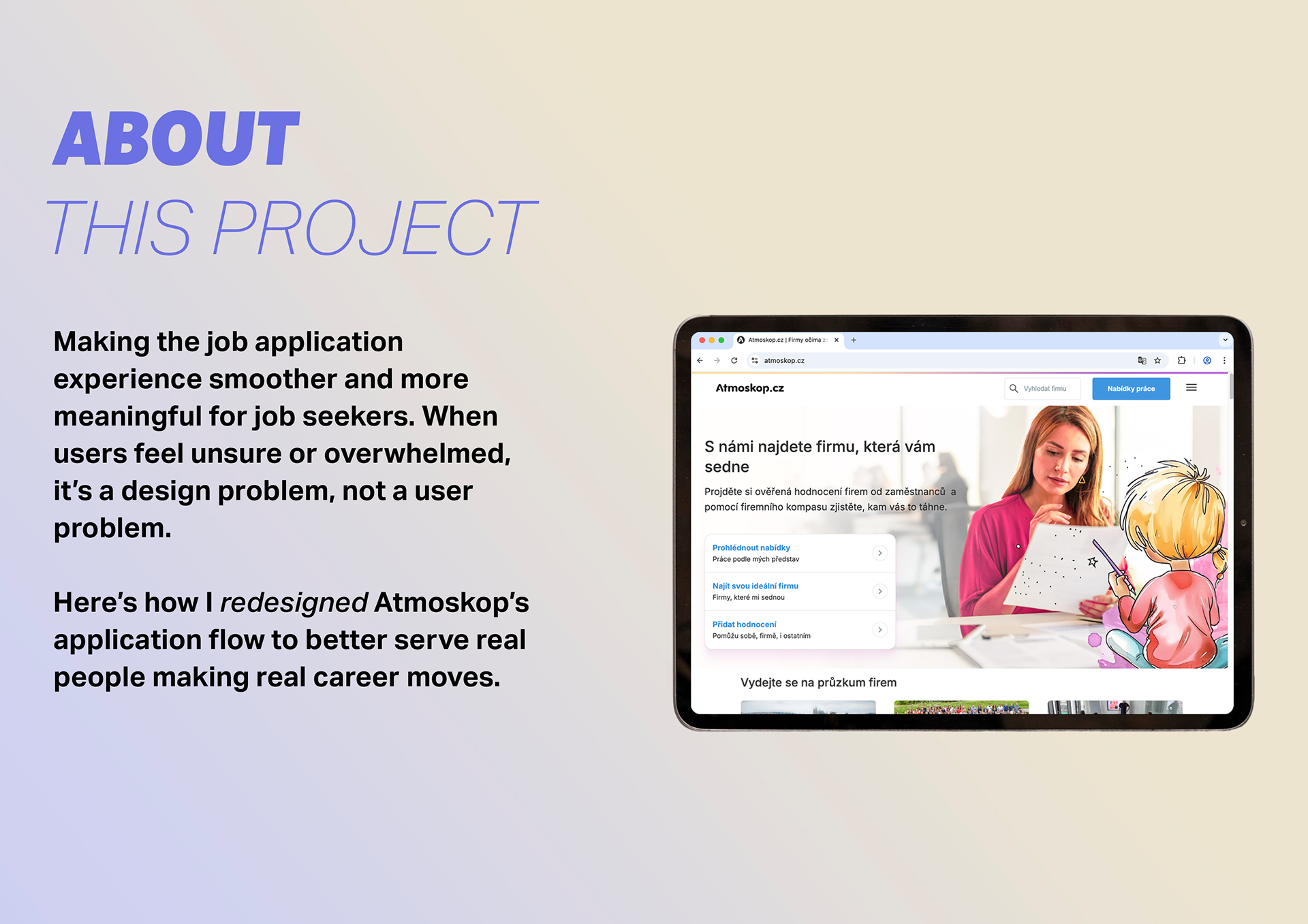
Making the job application experience smoother and more meaningful for job seekers. When users feel unsure or overwhelmed, it’s a design problem—not a user problem. Here's how I redesigned Atmoskop’s application flow to better serve real people making real career moves.
Why Atmoskop?
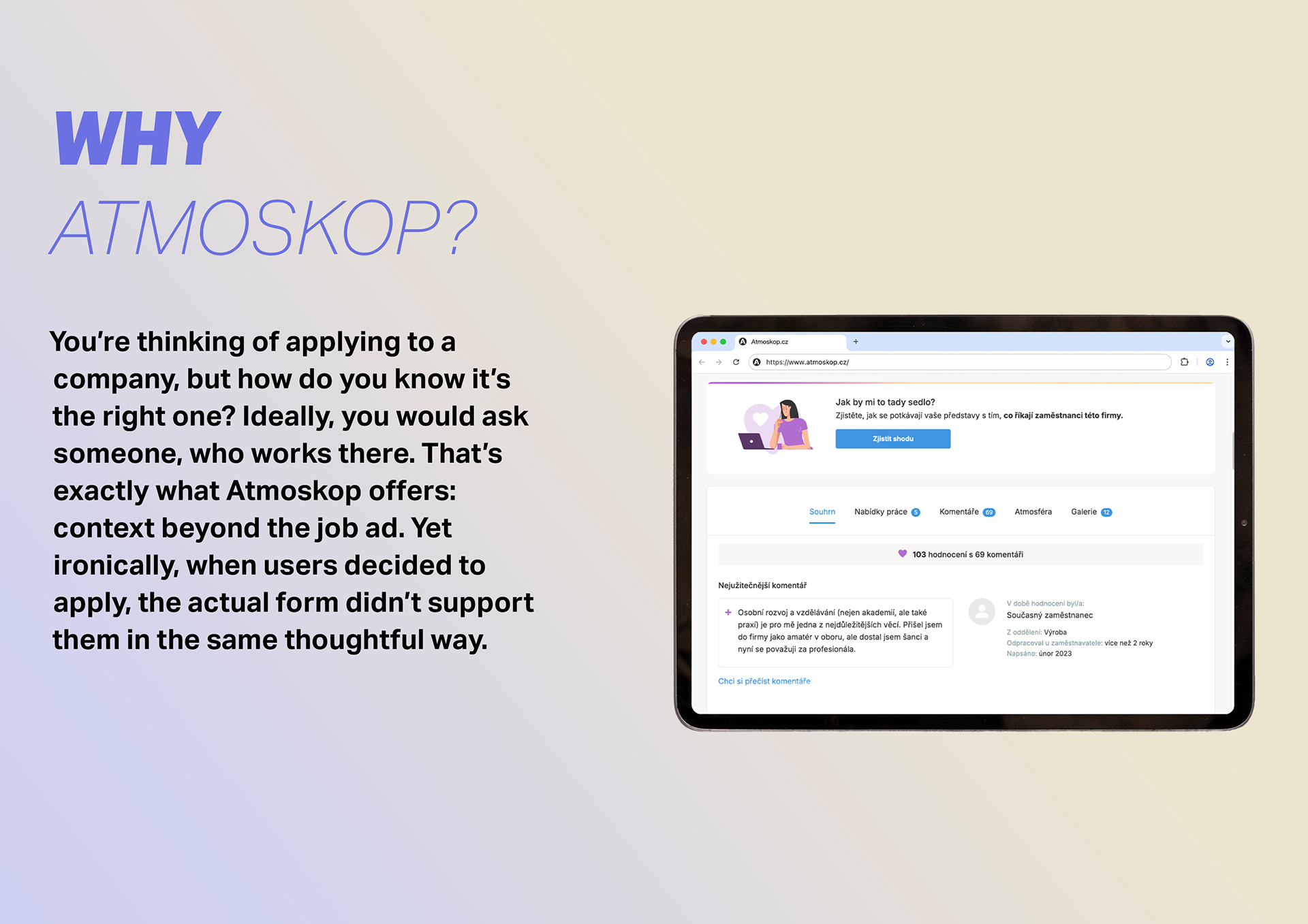
You're thinking of applying to a company, but how do you know it’s the right one? Ideally, you would ask someone, who works there... That’s exactly what Atmoskop offers: context beyond the job ad. Yet ironically, when users decided to apply, the actual form didn’t support them in the same thoughtful way.
👥 Audience
Atmoskop targets professionals who are intentional about their careers. They value transparency, efficiency, and relevance when they search for a job, and expect the same from the tools they use.
▸ The existing form didn’t meet those expectations
🗣️ Research Focus
Goal was to encourage users to apply, without overwhelming them. Key questions were:
▸ What methods do users use to search for job opportunities?
▸ How do users engage with the job application form?
▸ What are users' expectations regarding the structure and content of the form?
What we learned in the research phase:
User research showed that the response form felt old and too complicated. To fix this, a simpler version was created. Since Atmoskop users have their own way of doing things, the research really zoomed in on how they see and use the form, making sure the new design actually works for them.
Main Findings :
👉 A human and personal approach is keyApplicants appreciate when the recruitment process feels authentic and human. They prefer an approach that feels natural rather than robotic or anonymous
👉 Simplicity and clarity of the formApplication forms should not be overwhelming. Less is more – applicants prefer brevity, clear structure, and a minimum number of required fields.
👉Opportunity to show individuality: The form or profile should allow applicants to present not only their professional experience but also their personal motivations, preferences, and strengths.

Reframing the problem 💡
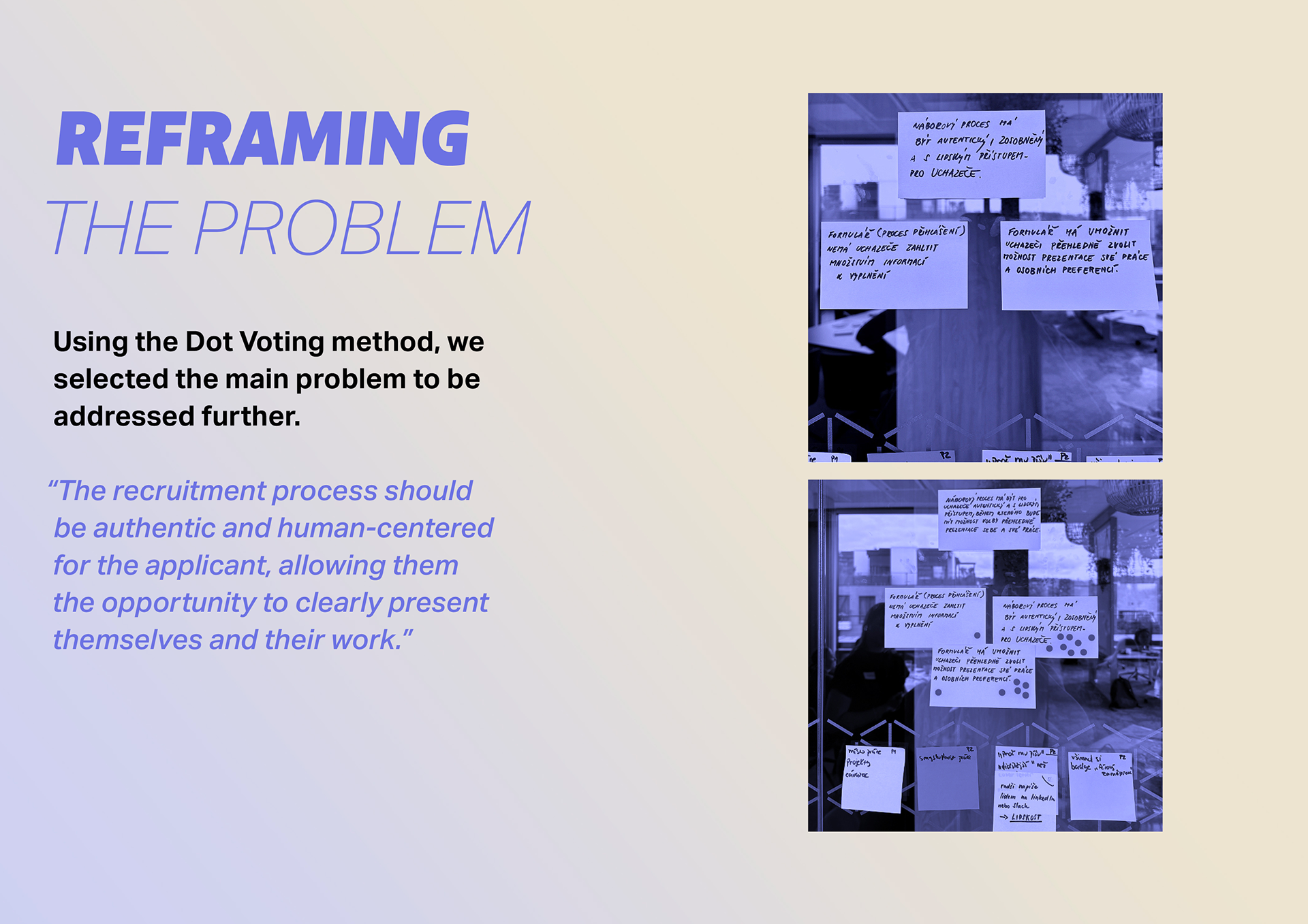
Using the Dot Voting method, we selected the main problem to be addressed further.​​​​​​​
"The recruitment process should be authentic and human-centered for the applicant, allowing them the opportunity to clearly present themselves and their work."
Ideation → Low-Fidelity Wireframe 
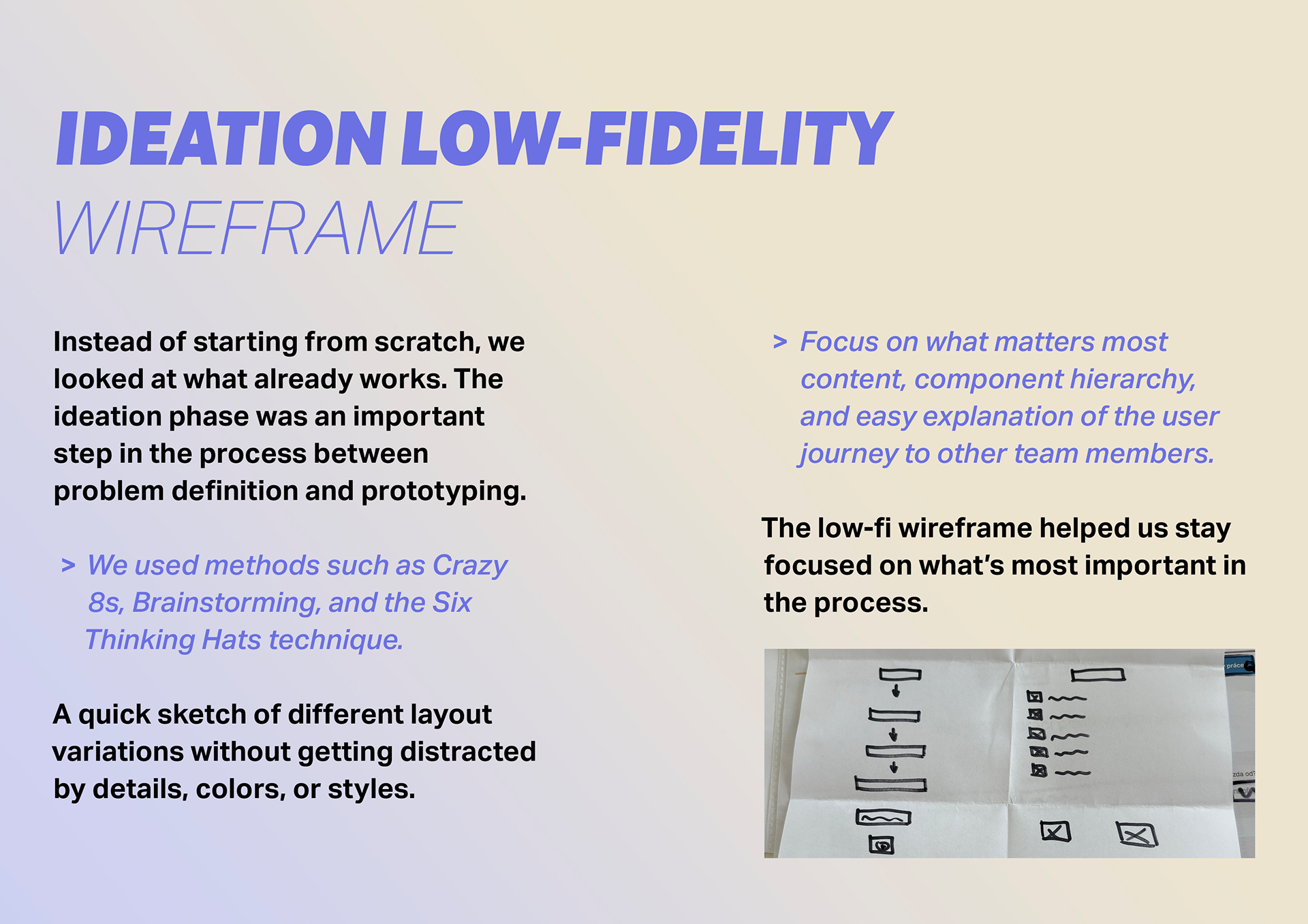
Instead of starting from scratch, we looked at what already works. The ideation phase was an important step in the process between problem definition and prototyping.

 We used methods such as Crazy 8s, Brainstorming, and the Six Thinking Hats technique.

A quick sketch of different layout variations without getting distracted by details, colors, or styles.
Focus on what matters most → content, component hierarchy, and easy explanation of the user journey to other team members.
The low-fi wireframe helped us stay focused on what’s most important in the process.
Prototyping
We allowed the respondent to respond non-commitally through a form, which led to the following outcome:

▸ The respondent stated that they were automatically redirected and forced to react without having the opportunity to read the job posting first.
▸ They also expressed confusion about the term “non-committal response” – they were unsure what to expect from such an interaction.
▸ Based on this feedback, we decided to adjust the application process so that the respondent can first read the entire form and only then decide whether to proceed.
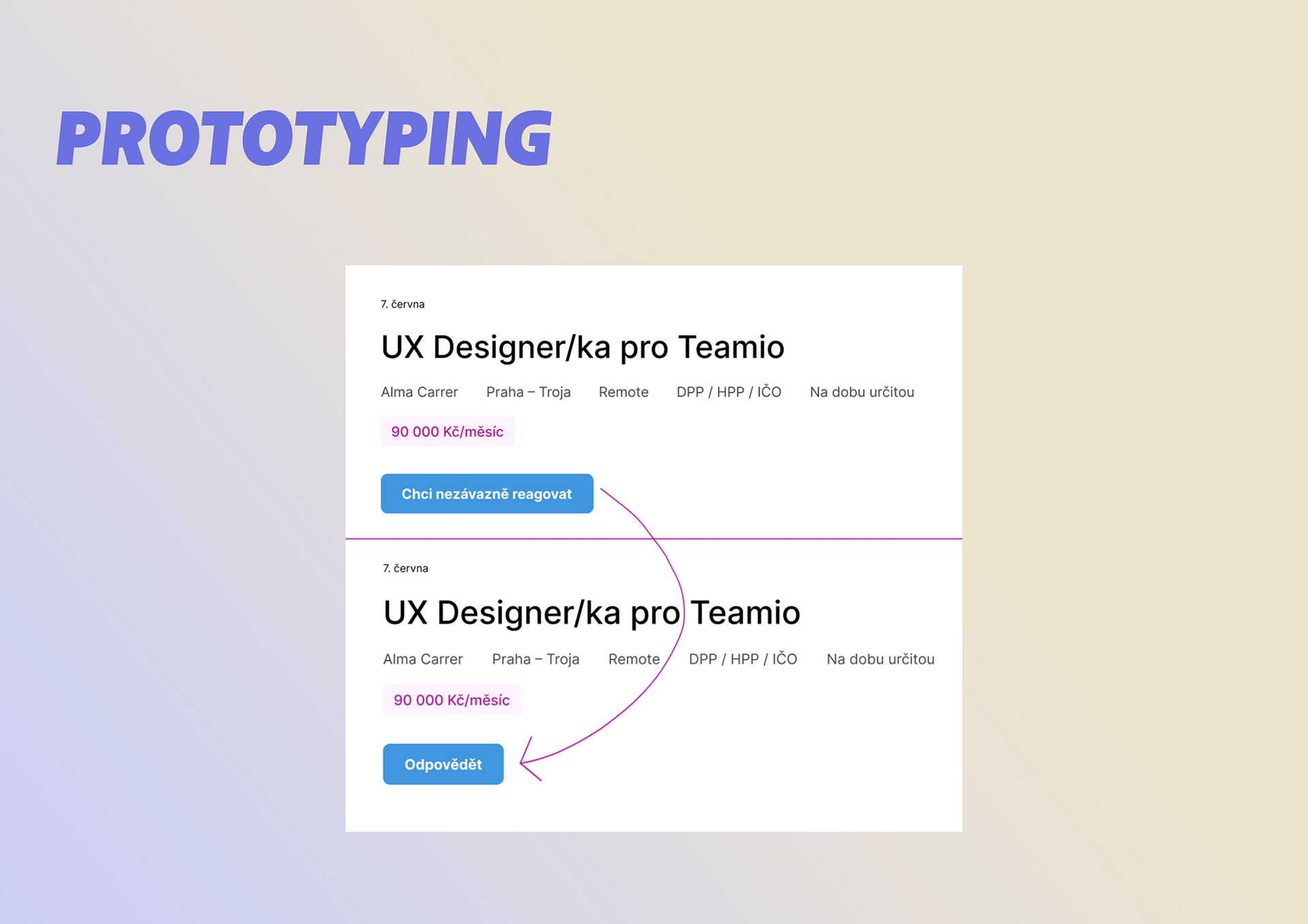
▸ ​​​​​​​At the same time, we changed the original phrasing “non-committal response” to a simpler and clearer “apply,” as the respondent was not sure what “non-committal” meant in this context.
Testing & Feedback

Positive reactions
The respondent gave positive feedback on the structure, conciseness, and visual aspect of the content, including the image documentation.

Challenges identified
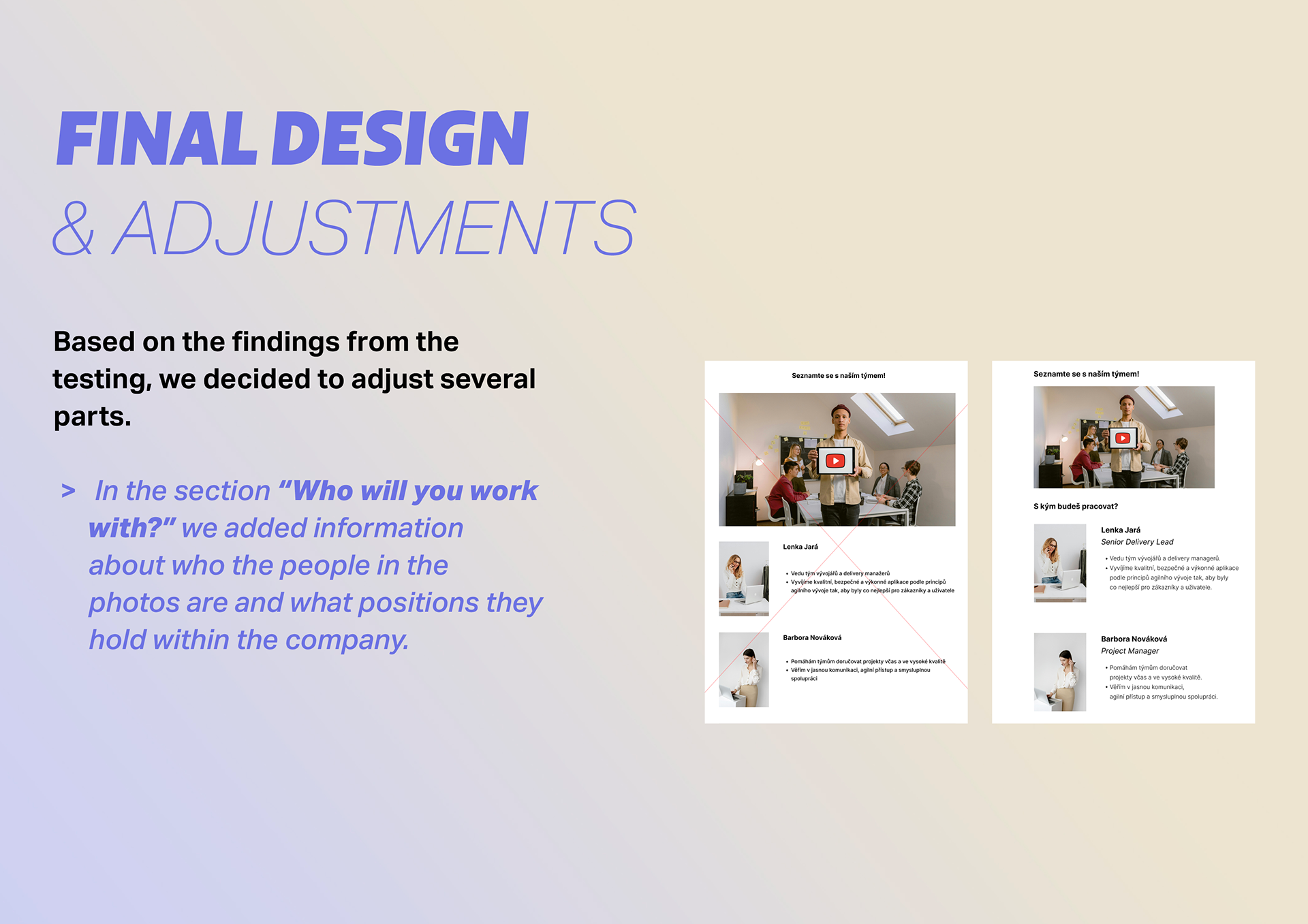
⚠️It’s not clearly defined who the people in the photos are (what positions they hold, whether they are part of the team, or what type of employees they represent).

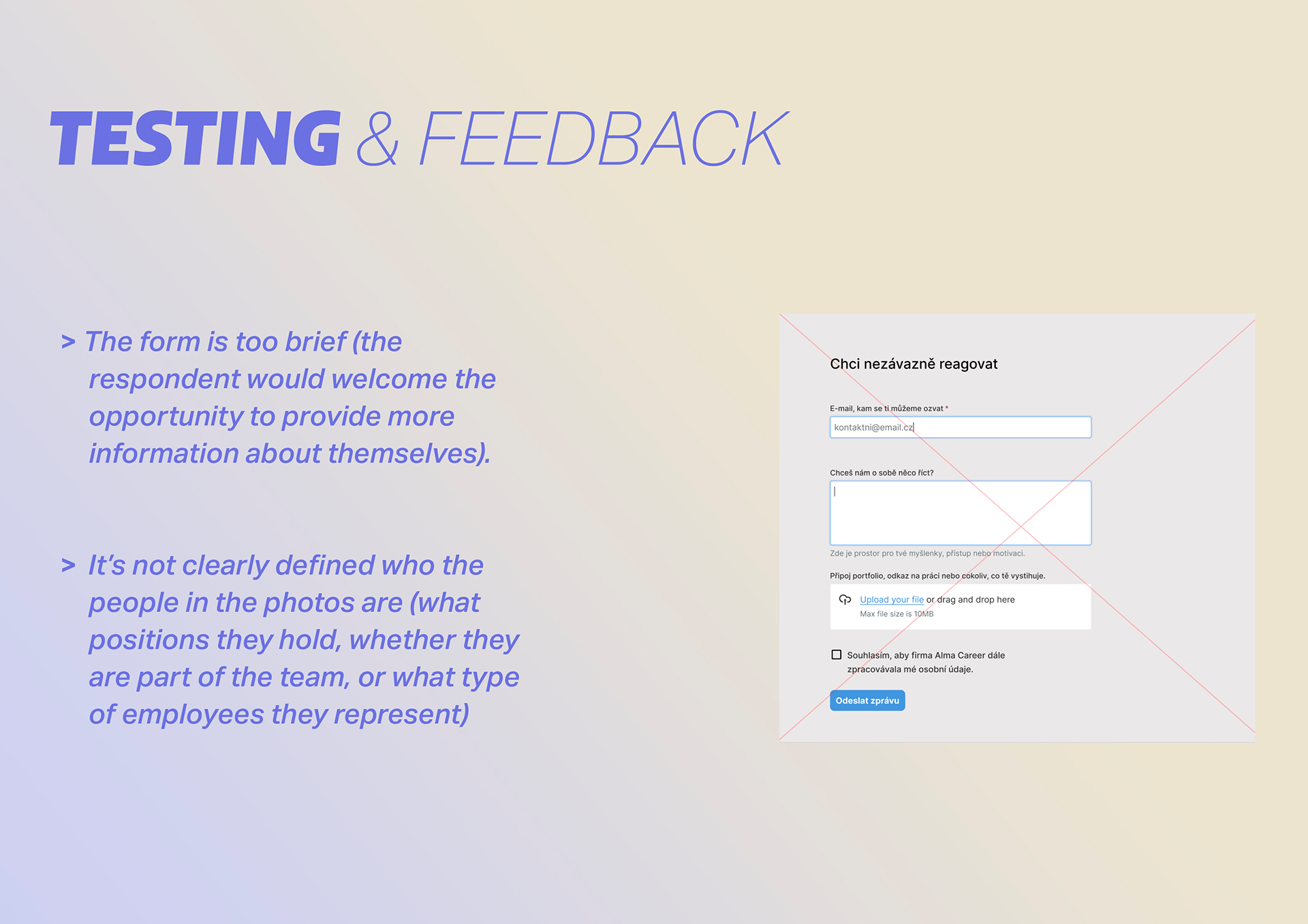
⚠️There is no field for a phone number (emails often end up in spam; the respondent would appreciate the option to add a phone number).

⚠️It’s not possible to enter a full name (this makes it harder to identify the applicant later).

⚠️Limitations when uploading files (it’s not possible to attach multiple documents at once).

⚠️The form is too brief (the respondent would welcome the opportunity to provide more information about themselves).
Final Design Adjustments 
Based on the findings from the testing, we decided to adjust several parts.
▸ In the section “Who will you work with?”, we added information about who the people in the photos are and what positions they hold within the company.​​​​​​​
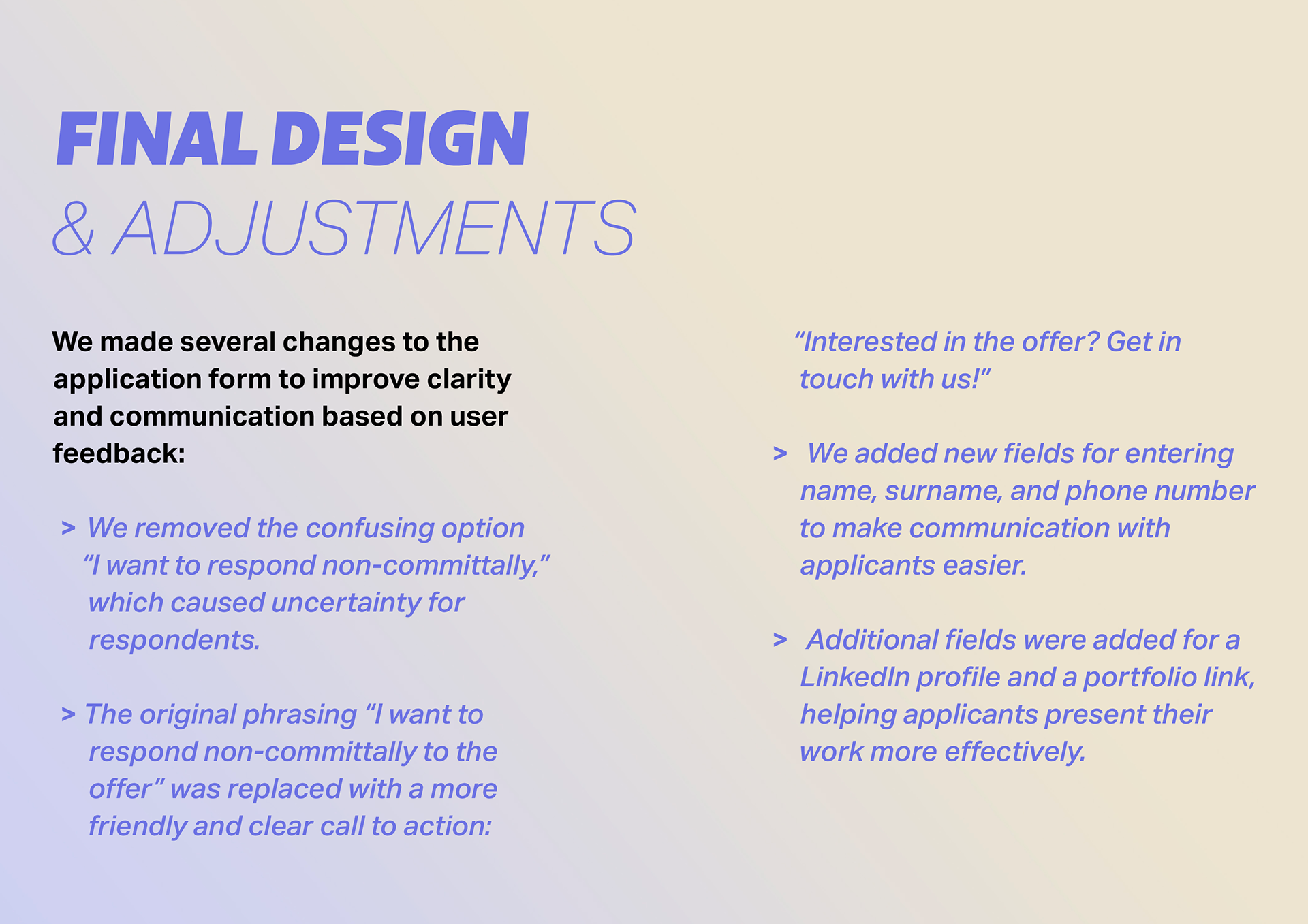
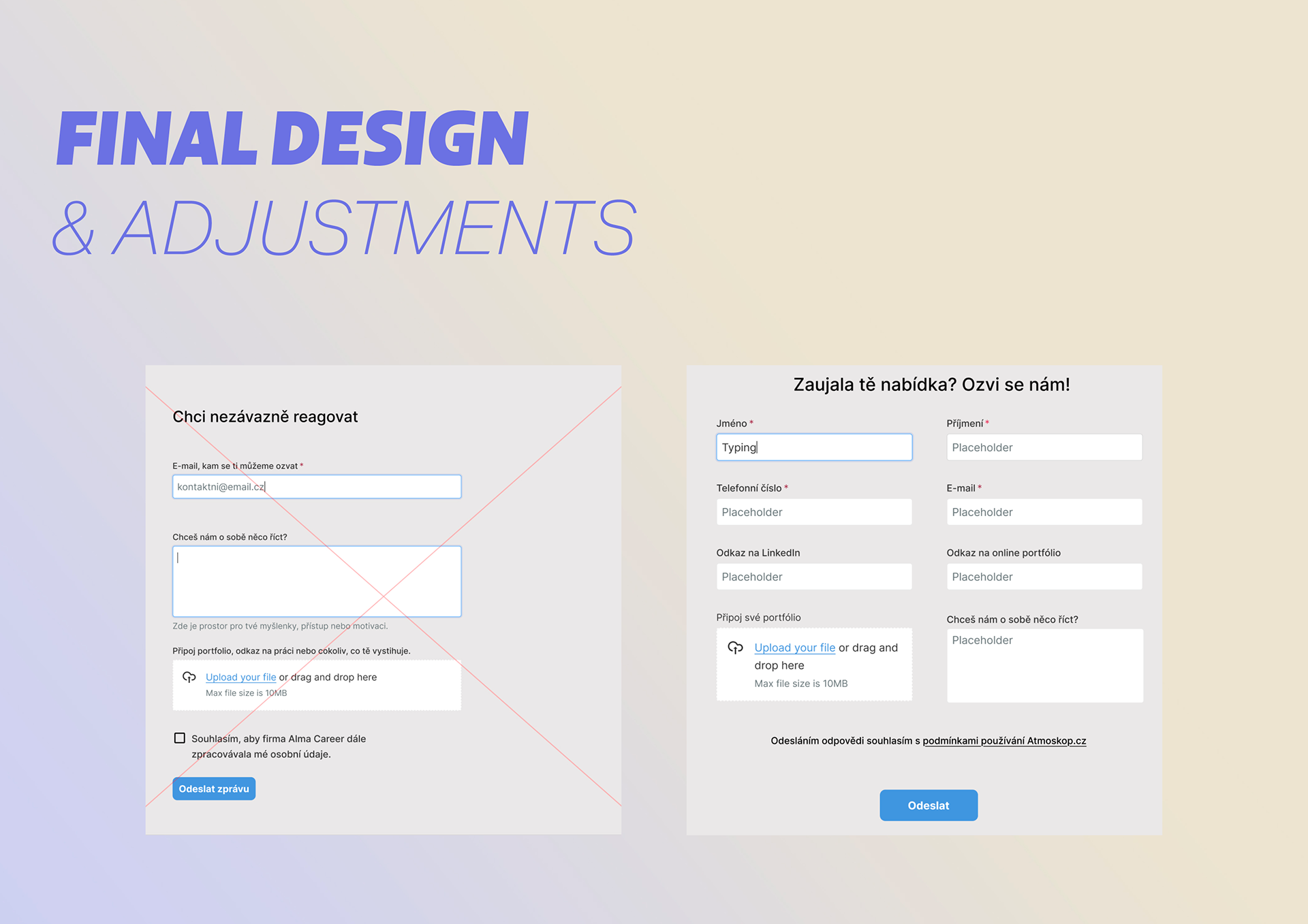
We made several changes to the application form to improve clarity and communication based on user feedback:
▸  We removed the confusing option “I want to respond non-committally,” which caused uncertainty for respondents.
▸  The original phrasing “I want to respond non-committally to the offer” was replaced with a more friendly and clear call to action: “Interested in the offer? Get in touch with us!”
▸  We added new fields for entering name, surname, and phone number to make communication with applicants easier.
▸  Additional fields were added for a LinkedIn profile and a portfolio link, helping applicants present their work more effectively.
Final Prototype 
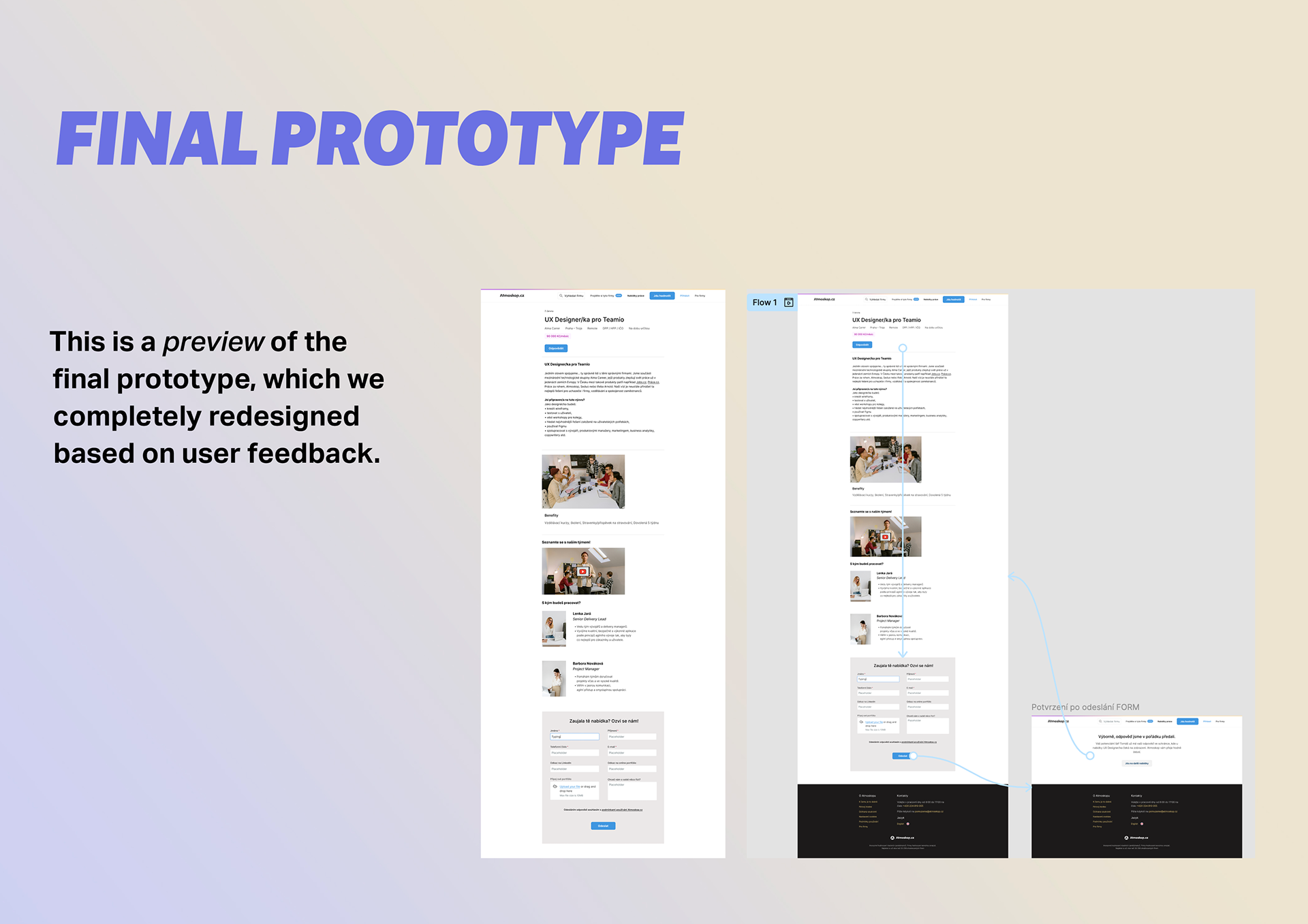
This is a preview of the final prototype, which we completely redesigned based on user feedback.
About this Project
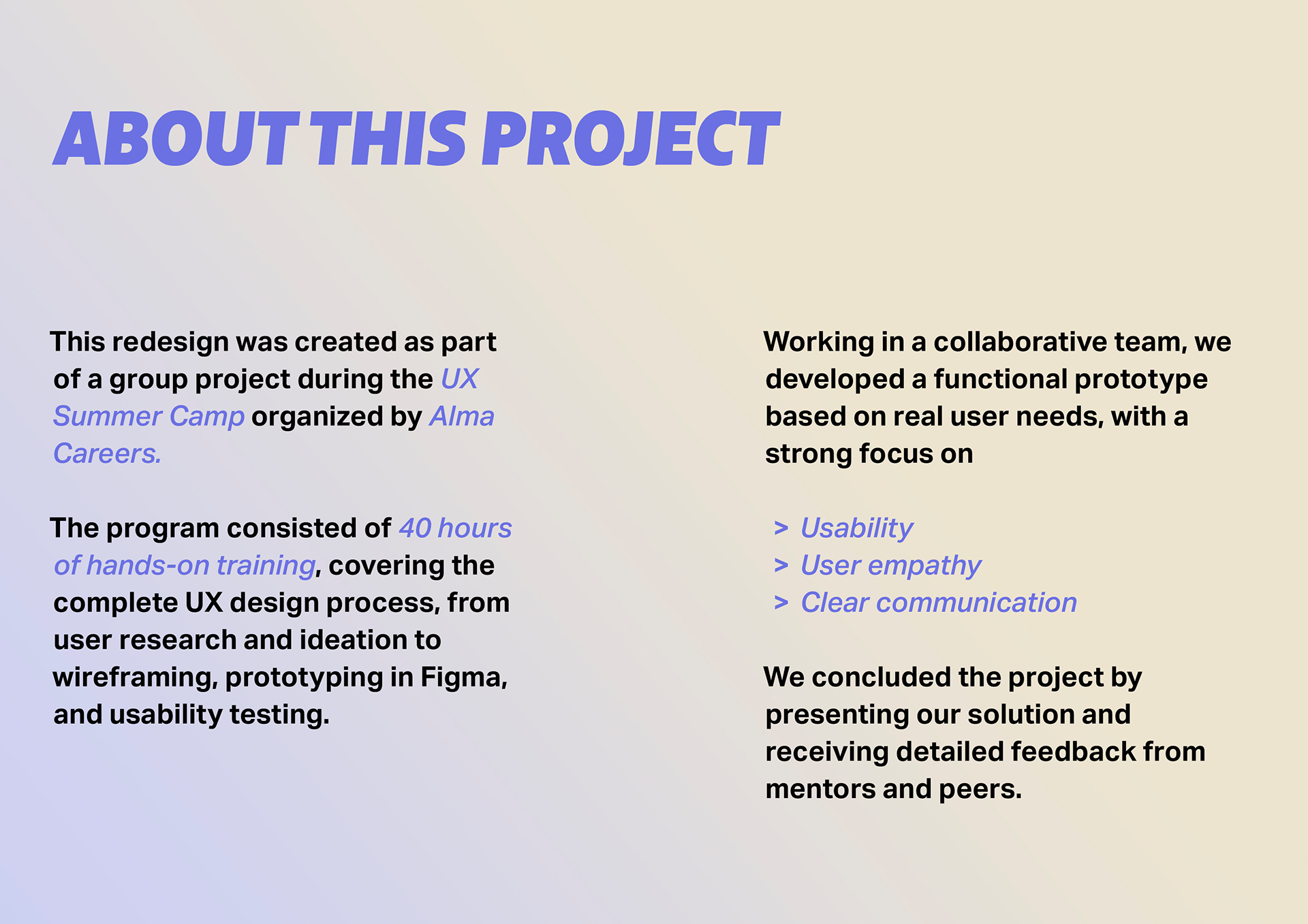
This redesign was created as part of a group project during the UX Summer Camp organized by Alma CareersThe program consisted of 40 hours of hands-on training, covering the complete UX design process, from user research and ideation to wireframing, prototyping in Figma, and usability testing.
Working in a collaborative team, we developed a functional prototype based on real user needs, with a strong focus on: i. Usability, ii. User empathy, & iii. Clear communication. We concluded the project by presenting our solution and receiving detailed feedback from mentors and peers.
Back to Top